
03
SEP
Understanding Migraine: How Can Yoga Help?
Have you ever experienced a headache so bad and intense that even the smallest sound feels unbearable, bright light becomes extremely painful and all you want is a dark, quiet room? If so, it may not have been “just a headache”. It could have been a migraine.
A migraine is much more than a simple headache. It is a complex neurological condition that affects our brain and nervous system, often causing intense throbbing pain accompanied by symptoms such as nausea, sensitivity to light and sound, dizziness and sometimes, even temporary changes in vision. A migraine attack can last anywhere between a few hours to several days, making even the simplest daily activities feel overwhelming.
For many people, migraines affect far more than physical comfort, disrupting work, relationships, sleep, and daily life. The uncertainty of attacks can also create ongoing stress and anxiety, reducing overall quality of life.
Medication is often essential in migraine management. However, it can have side effects, and frequent use of pain relievers may lead to medication-overuse headaches or reduced effectiveness. Because of this, many people also look for natural, evidence-informed ways to support their treatment.
Pain is often the body’s way of asking us to listen. Rather than simply suppressing a migraine, it can be seen as a signal that the body and mind need attention. Factors like stress, poor sleep, dehydration, irregular eating, hormonal changes, and nervous system overload may contribute or indicate imbalance. Addressing these alongside medical care is important for long-term management.
This is where yoga can offer valuable support. Yoga is not a cure for migraine, nor should it replace medical treatment. Through mindful movement, conscious breathing, relaxation, and a balanced lifestyle, yoga may help reduce stress, support nervous system regulation, improve sleep, and promote overall well-being. With regular practice, it may also help some people reduce the frequency or intensity of migraine episodes.
There are two main types of migraine:
- Migraine without aura – previously referred to as common migraine
- Migraine with aura – previously referred to as classical migraine
The main difference between them is the presence of an aura, a group of temporary neurological symptoms that can occur before or during a migraine attack.
How Can Yoga Help?
Yoga looks at migraine beyond just the headache. It works gently with your body and mind through movement, breath, and relaxation to help you feel more balanced overall.
With consistent practice, simple yoga postures can also support relaxation, ease tension, and improve overall well-being.
Here are some practices that may be incorporated into a regular yoga practice:
- Mukha Douthi – Mukha Dhauti is a practice that can help bring awareness to the face, breath, and sensory organs when practised correctly. When practised appropriately, it may promote a sense of freshness and relaxation, which can be beneficial for those who experience stress-related headaches.
- Sarvangasana – Sarvangasana encourages a calm, inward focus and can be part of a practice aimed at supporting nervous system balance. Practised regularly and under proper guidance, it may help improve overall relaxation and well-being.
- Matsyasana – Matsyasana opens the chest and encourages deeper, more conscious breathing. It can help release tension around the upper body and promote relaxation, which may be useful when stress and muscular tension contribute to migraine episodes.
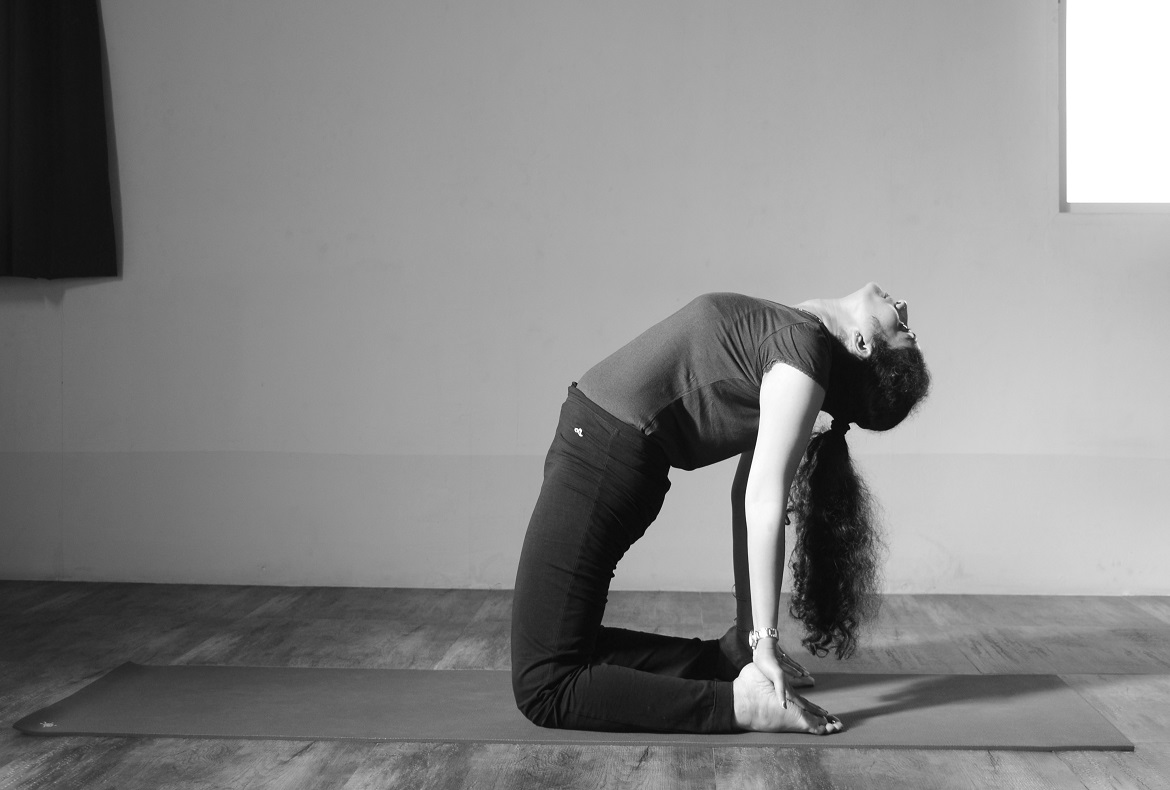
- Ushtrasana – Ushtrasana opens the front of the body and encourages awareness of the breath. Its controlled practice may help relieve accumulated physical tension and support a more relaxed breathing pattern.
- Padahastasana – Padahastasana is a forward-bending posture that can encourage a quieter, more inward-focused state. It may help release tension and promote relaxation when practised comfortably.
- Parsvottanasana – Parsvottanasana combines balance, controlled movement, and conscious breathing. It can help cultivate steadiness and body awareness while releasing tension through the legs, hips, and back.
- Prasarita Padottanasana – Prasarita Padottanasana is an asana that encourages grounding and relaxation. When practised comfortably, it can help reduce physical tension and bring greater awareness to the breath.
- Chakrasana – Chakrasana is a backbend that strengthens and opens the body while encouraging deep, conscious breathing. It should be practised only when the practitioner has adequate preparation, strength, and mobility.
- Bhramari Pranayama – Bhramari, or the humming-bee breath, uses a gentle humming sound during exhalation. The vibration and slow breathing can have a calming effect and may help reduce stress and promote relaxation, making it a useful practice for people managing migraines. (It should not be practised during an episode)
Managing migraine is not only about managing the pain, but also about understanding and caring for the body and mind. Pain is often the body’s way of asking us to listen, and yoga gives us a way to listen through movement, breath, and awareness. With regular practice and appropriate medical care, yoga can become a valuable part of a lifestyle that supports greater balance and well-being.
Watch this video below to explore these simple yoga practices for migraine management: